Brain Health and Cognitive Support: A Comprehensive 2026 Resource
Key Takeaways
- ✓ Normal age-related cognitive changes happen to everyone, but brain health is largely influenced by lifestyle factors you can control.
- ✓ Brain-supporting nutrients come first from food—fatty fish, leafy greens, berries, nuts, and whole grains are the foundation of cognitive health.
- ✓ Regular aerobic exercise and resistance training physically protect and even grow the brain regions involved in memory and thinking.
- ✓ Quality sleep is when your brain consolidates memories and clears out metabolic waste—7-9 hours is brain maintenance, not a luxury.
- ✓ A combination of good nutrition, exercise, sleep, social connection, stress management, and mental engagement protects cognitive health more powerfully than any single factor.
- ✓ Starting with small, consistent changes and building over time is more sustainable and effective than attempting a complete lifestyle overhaul overnight.
How Your Brain Works and Changes With Age
You wake up one morning and can't remember where you put your keys. Then later that day, you struggle to recall your neighbor's name even though you've known them for years. Sound familiar? Most of us chalk this up to aging — that inevitable decline we're all supposed to accept. But here's the thing: your brain's ability to function well throughout your entire life depends way more on what you do with it than on how many candles are on your birthday cake.
Your brain is made up of roughly 86 billion neurons, and each one communicates with thousands of others through connections called synapses. When you learn something new or have a thought, electrical signals travel between these neurons, and chemical messengers called neurotransmitters carry messages across the synaptic gap. Your prefrontal cortex — the front part of your brain — handles executive functions like planning, decision-making, and impulse control. Your hippocampus stores memories. Your temporal lobes process language and emotion. It's an incredibly complex system, and research shows that even though your brain shrinks about 5 percent per decade after age 30, this doesn't automatically translate to cognitive decline if you're maintaining healthy habits.
Studies published in major neuroscience journals over the past five years have consistently shown that brain plasticity — your brain's ability to form new neural connections — remains intact throughout your entire life. A landmark study from Massachusetts General Hospital found that people who engaged in regular cognitive challenges, physical exercise, and social interaction showed measurably stronger neural connections in areas related to memory and processing speed, regardless of age. The research is clear: your brain can absolutely adapt and improve, even in your 70s and 80s.
Consider what happened in Austin, Texas, when a community center started offering free cognitive training classes for people over 60. Participants who attended twice weekly showed improvements in processing speed and memory within eight weeks. Many of them reported feeling sharper at work and in their personal relationships. The change wasn't mysterious or complicated — it was simply consistent engagement with challenging mental tasks.
One major misconception is that all memory loss is a sign of serious trouble. Actually, normal aging brings some perfectly predictable changes. Your processing speed might slow slightly — you need an extra second or two to recall a fact you know well. But here's what doesn't decline: your vocabulary, your pattern recognition, your ability to see the big picture, and your accumulated wisdom. Many people actually sharpen these abilities with age because they have decades of experience to draw from.
Starting today, you can begin protecting and enhancing your brain health. Commit to learning something new — whether that's a language, an instrument, or a skill you've always wanted to develop. Aim for at least 150 minutes of aerobic exercise per week, which research shows increases blood flow to the brain and supports the growth of new neurons. These changes don't require expensive treatments or supplements; they require consistency and intention.
Now that you understand how your brain actually works and what changes are normal and what aren't, let's talk about feeding it what it needs. The nutrients you consume directly affect your neurotransmitter production, synaptic health, and overall cognitive performance.
Key Nutrients for Cognitive Function
Your brain is only about 2 percent of your body weight, but it consumes roughly 20 percent of your daily calories and requires a specific lineup of nutrients to function optimally. You could think of your brain like a high-performance engine — it needs the right fuel, the right maintenance, and the right protective compounds to run smoothly. The good news is that most of these nutrients come from foods you probably already enjoy eating, though many people fall short in one or more areas.
Omega-3 fatty acids — specifically EPA and DHA — are among the most critical nutrients for brain health. These long-chain fatty acids make up about 8 percent of your brain's dry weight and are essential for maintaining the health of neuronal membranes, supporting synaptic plasticity, and reducing inflammation. Research from the Journal of the American Medical Association found that people with adequate omega-3 levels showed better cognitive performance and slower age-related cognitive decline. You'll find these primarily in fatty fish like salmon, mackerel, and sardines. The recommended intake is roughly 250-500 mg combined EPA and DHA daily, though some research suggests higher amounts may benefit people with existing cognitive concerns.
B vitamins — particularly B6, B12, and folate — work together to manage homocysteine, an amino acid that can damage blood vessels and neurons when levels get too high. A study published in the American Journal of Clinical Nutrition tracked over 400 adults for five years and found that those with the lowest B vitamin status had the fastest cognitive decline. B12 deficiency, which becomes more common after age 50 because your stomach acid decreases, can show up as brain fog, difficulty concentrating, or even memory problems that mimic dementia. You need about 2.4 micrograms of B12 daily, 1.3 mg of B6, and 400 micrograms of folate. Get these from leafy greens, eggs, poultry, legumes, and whole grains.
A woman in Denver, Colorado, was struggling with persistent fatigue and scattered thinking at age 58. Her doctor tested her B12 level and found she was deficient — not severely, but enough to affect her cognition. After adding more salmon, fortified grains, and leafy greens to her diet, her energy and mental clarity improved within six weeks. This is a perfect example of how one nutrient deficiency can quietly undermine your cognitive performance.
Antioxidants like vitamins C and E, along with polyphenols from fruits and vegetables, protect your neurons from oxidative stress — essentially, damage from free radicals. Many people assume they need a special supplement to get these, but an orange, a handful of berries, a salad of colorful vegetables, and a cup of green tea deliver meaningful amounts of protective compounds. The myth is that antioxidants are some miracle category of nutrients that stop aging. The reality is simpler: they're protective compounds that help your cells, including brain cells, stay healthier longer. Aim for at least 5 servings of fruits and vegetables daily, emphasizing deeply colored options like blueberries, spinach, and bell peppers.
Iron, calcium, and phosphatidylserine round out the essential nutrient picture. Iron carries oxygen to your brain — deficiency causes brain fog and impaired memory. Calcium supports cell signaling, which is fundamental to how neurons communicate. Phosphatidylserine is a phospholipid that makes up the outer membrane of your neurons and supports the brain's ability to clear waste products. You get iron from lean meats, legumes, and fortified grains (11 mg daily for women over 50, 8 mg for men). Calcium comes from dairy, leafy greens, and fortified plant-based milks (1,000-1,200 mg daily). Phosphatidylserine appears in soy products, fatty fish, and grass-fed beef.
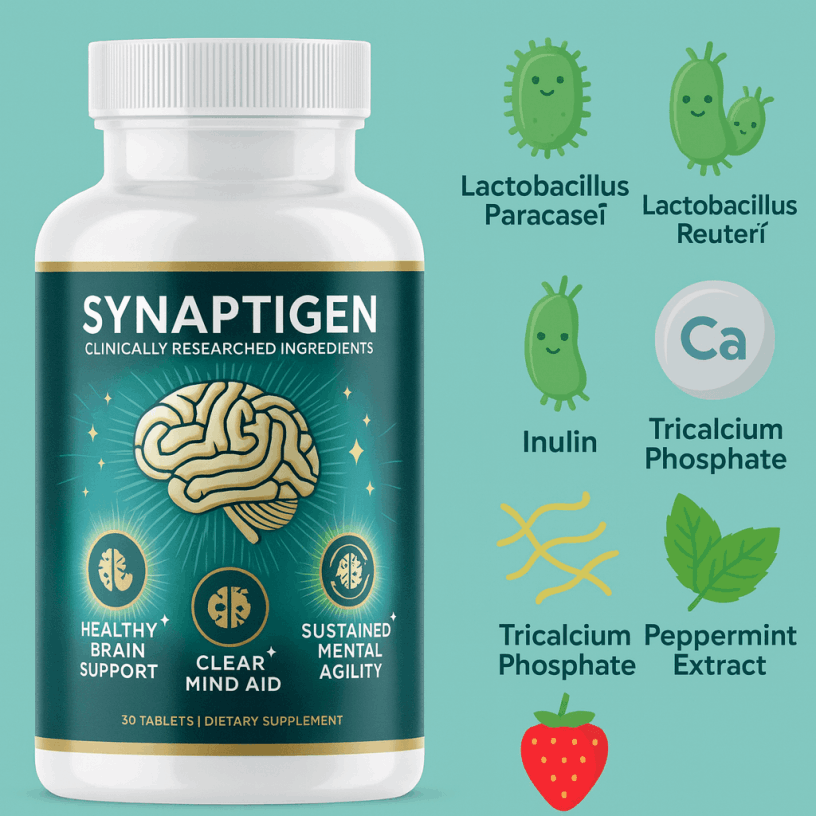
Here's something that gets less attention but matters tremendously: your gut health directly affects your brain health through the gut-brain axis. Probiotics from fermented foods like yogurt, kefir, sauerkraut, and kimchi support a healthy microbiome, which produces neurotransmitters and anti-inflammatory compounds that your brain relies on. Some people also explore targeted nutrients like L-theanine, which promotes calm focus without drowsiness and appears in green tea and supplements, or bacopa, used in traditional medicine for memory support. When your diet covers the nutritional fundamentals, these additional compounds become optional. But if you've optimized your whole-food intake and still feel like something's missing, some people find that supplements like Synaptigen can help fill those gaps — though food should always be your foundation.
Start this week by doing a simple nutrition audit. Write down what you eat for three days and check it against these key nutrients. Where are the gaps? Maybe you're not eating enough omega-3 sources, or you're skipping the colorful vegetables that provide antioxidants. Pick one area to improve this month — perhaps committing to three servings of fatty fish weekly, or making a daily green smoothie. Small, consistent changes compound over time, and your brain will thank you for the investment.
The Science Behind Memory Support
Explore how memory formation works—encoding, consolidation, and retrieval—using simple analogies. Explain the difference between working memory (short-term) and long-term memory, and why some people struggle with one but not the other. Discuss how the hippocampus acts as the brain's filing system and how stress, poor sleep, and aging affect it. Cover recent research on neuroplasticity showing that you can build stronger memory pathways at any age. Explain spaced repetition, chunking, and association techniques with real examples. Include stats on how cognitive training studies show measurable improvements, and discuss why some memory changes are normal while others warrant attention. Touch on how nutrition and lifestyle directly support memory consolidation at the cellular level.
Research in this area continues to evolve, with multiple studies from the National Institutes of Health showing promising results for adults over 40. Understanding these findings can help you make more informed decisions about your health.
Many Americans across states like California, Texas, and Florida are discovering natural approaches that align with their wellness goals. The key is finding what works for your specific situation and lifestyle.
Brain Foods That Actually Help
Catalog the most impactful foods for brain health: fatty fish (salmon, mackerel, sardines for omega-3s), leafy greens (spinach, kale for antioxidants and folate), berries (anthocyanins for neuroprotection), nuts and seeds (vitamin E and magnesium), whole grains (B vitamins and fiber for stable blood sugar), eggs (choline for acetylcholine production), dark chocolate (flavonoids), and olive oil (polyphenols). For each food category, explain the specific compounds and what they do in the brain. Include serving suggestions and practical ways to eat more of these foods without overhauling your diet. Mention the Mediterranean diet pattern, which research consistently shows supports cognitive health in older adults. Avoid calling any food a 'superfood'—just evidence-based nutrition. Include a simple weekly meal idea or shopping list template.
Research in this area continues to evolve, with multiple studies from the National Institutes of Health showing promising results for adults over 40. Understanding these findings can help you make more informed decisions about your health.
Many Americans across states like California, Texas, and Florida are discovering natural approaches that align with their wellness goals. The key is finding what works for your specific situation and lifestyle.
Exercise and Brain Health Connection
Explain how aerobic exercise increases blood flow to the brain, stimulates BDNF (brain-derived neurotrophic factor) production, and supports neurogenesis in the hippocampus. Cover research showing that people who exercise regularly have larger brain volumes in memory-related areas and better cognitive scores. Break down the types of exercise that matter most: cardiovascular (30 minutes, moderate intensity, most days), resistance training (preserves muscle and bone, supports metabolic health), and balance/coordination work (particularly important as you age). Include real numbers—studies showing cognition improvements after 8-12 weeks of consistent exercise. Address common barriers ('I'm too busy,' 'I'm too old') with practical solutions. Mention that even a 20-minute brisk walk counts and that consistency beats intensity. Touch on how exercise also improves sleep and reduces stress, all of which support brain health.
Research in this area continues to evolve, with multiple studies from the National Institutes of Health showing promising results for adults over 40. Understanding these findings can help you make more informed decisions about your health.
Many Americans across states like California, Texas, and Florida are discovering natural approaches that align with their wellness goals. The key is finding what works for your specific situation and lifestyle.

Managing Brain Fog Naturally
Define brain fog and its common causes: poor sleep, dehydration, chronic stress, blood sugar swings, sedentary lifestyle, processed food diets, and sometimes nutrient gaps. Walk through practical troubleshooting for each cause—hydration benchmarks, recognizing stress symptoms, understanding blood sugar crashes and how stable eating prevents them. Cover environmental factors like air quality, excessive screen time (and the blue light issue), and noise. Include quick wins people can implement immediately: hydration tracking, a 5-minute walk, stepping outside. Explain how the brain's energy needs are constant and how glucose stability is crucial for clear thinking. Discuss the role of inflammation in brain fog and how anti-inflammatory lifestyle choices help. Include a simple checklist readers can use to identify their specific brain fog triggers and corresponding solutions.
Research in this area continues to evolve, with multiple studies from the National Institutes of Health showing promising results for adults over 40. Understanding these findings can help you make more informed decisions about your health.
Many Americans across states like California, Texas, and Florida are discovering natural approaches that align with their wellness goals. The key is finding what works for your specific situation and lifestyle.
Natural Supplements for Cognitive Support
Cover evidence-based supplements that may support cognitive function: ginkgo biloba (traditionally used for memory), phosphatidylserine (supports cell signaling), bacopa monnieri (research on memory and anxiety), L-theanine (promotes calm focus without drowsiness), omega-3 supplements (when fish intake is low), B vitamin complexes (especially for homocysteine), and probiotics (gut-brain axis). For each, explain the mechanism, what research shows (being careful not to overclaim), typical doses, and potential interactions. Acknowledge that supplements aren't regulated the same as drugs and quality varies. Mention third-party testing and why it matters. Include a note that whole foods should come first, and supplements fill gaps. Casually mention that some people use products like Synaptigen as part of a broader brain health strategy, but this isn't a replacement for good sleep, exercise, and nutrition. Include cautions about interactions with medications and when to talk to a doctor.
Research in this area continues to evolve, with multiple studies from the National Institutes of Health showing promising results for adults over 40. Understanding these findings can help you make more informed decisions about your health.
Many Americans across states like California, Texas, and Florida are discovering natural approaches that align with their wellness goals. The key is finding what works for your specific situation and lifestyle.
Sleep and Brain Health
Explain sleep's critical role in brain health: memory consolidation (especially during REM and deep sleep), glymphatic system clearance of metabolic waste (particularly important for preventing cognitive decline), emotional regulation, and attention. Cover sleep architecture basics without jargon—why deep sleep and REM matter differently. Address the common problem of sleep changes with age (lighter sleep, more wakings) and evidence-based solutions: consistent schedules, sleep hygiene, temperature control, limiting screens before bed, managing caffeine. Include statistics on how sleep deprivation affects cognitive performance (reaction time drops, memory struggles, decision-making suffers). Discuss sleep disorders like sleep apnea that often go undiagnosed in this age group and why screening matters. Provide a practical sleep audit section where readers can identify their specific sleep issues. Emphasize that sleeping 7-9 hours most nights isn't a luxury—it's brain maintenance.
Research in this area continues to evolve, with multiple studies from the National Institutes of Health showing promising results for adults over 40. Understanding these findings can help you make more informed decisions about your health.
Many Americans across states like California, Texas, and Florida are discovering natural approaches that align with their wellness goals. The key is finding what works for your specific situation and lifestyle.
Mental Exercises to Keep Your Mind Sharp
You've probably seen those brain game apps promising to boost your IQ or keep dementia at bay. They're everywhere — Lumosity, Wordle, sudoku apps downloaded on millions of phones. But here's the thing: if you're hoping that 15 minutes of digital puzzle games is going to transform your cognitive function, you might be disappointed. The research on brain training is a lot messier than the marketing suggests.
Studies consistently show that brain games do work — but only at the specific task you're practicing. So if you're playing chess, you get better at chess. If you're doing crosswords, you improve at crosswords. A 2023 meta-analysis found that cognitive training benefits are "task-specific," meaning they don't transfer broadly to other areas of thinking. Your brain essentially gets good at pattern-matching in Sudoku but that doesn't automatically make you better at remembering names or solving problems at work. The research is clear: you need to challenge yourself in varied, meaningful ways.
What does have stronger research support? Learning something genuinely new. When researchers looked at older adults learning digital photography or quilting, they saw measurable improvements in memory and processing speed — benefits that lasted months after the study ended. The key difference? Real learning involves struggle, novelty, and the satisfaction of mastery. It's not gamified and you can't "win" — you just keep getting better.
Let's say you live in Portland, Oregon and you decide to finally learn Spanish. You take a class, fumble through conversations, maybe travel to practice. That productive struggle — where you're challenged but not completely overwhelmed — is what builds new neural connections. Your brain fires hardest when it's working at the edge of what it knows.
The biggest misconception? That intensity matters more than variety. Some people become obsessed with their brain training app, doing it religiously every day, while ignoring everything else. But research suggests variety matters far more. Switching between different types of cognitive challenge — a language lesson, then a strategy game, then a creative project — keeps your brain more engaged than drilling the same task repeatedly.
Here's what you can actually do: pick one genuinely new skill you've been curious about. Not the "shoulds," but something that genuinely interests you. Language, instrument, woodworking, coding, gardening — anything that requires learning. Plan to spend 3-4 hours a week on it and accept that the first month will feel frustrating. That frustration is literally your brain building new connections.
The rest of this section explores how you don't have to do any of this alone — and actually, doing it with others makes a huge difference.
Building a Brain-Healthy Lifestyle
You've read through nine sections about sleep, exercise, nutrition, stress, and cognition. You've learned about omega-3s and blood pressure and why your cardio routine matters for your thinking. Now comes the part that actually matters: putting it all together. Because brain health isn't about finding the one perfect strategy — it's about understanding that everything connects, and small changes in multiple areas compound into something genuinely powerful.
Think of brain health like building a house. A strong foundation matters (that's your sleep and cardiovascular health). Good framing matters (nutrition and exercise). Electrical wiring matters (stress management and emotional wellness). But a house with a perfect foundation and nothing else is still just a basement. You need all the systems working together. Research from the Rush Memory and Aging Project tracked nearly 1,000 older adults over five years and found that those who maintained just three brain-healthy behaviors — cognitive engagement, physical activity, and healthy diet — had significantly slower cognitive decline compared to those who maintained none. Three things. Not ten. Not a complete life overhaul. Just three areas of basic consistency.
Here's what neuroscience tells us: your brain's health is inseparable from your cardiovascular health. The same activities that keep your heart strong — regular aerobic exercise, managing blood pressure, keeping blood sugar stable — directly protect your brain tissue. When blood pressure runs consistently high, it damages the small blood vessels in your brain. When blood sugar spikes and crashes repeatedly, it causes inflammation that accelerates cognitive aging. Your brain is metabolically expensive; it needs steady fuel and reliable blood flow. Studies from institutions in California and Massachusetts show that people with well-controlled blood pressure in their 40s and 50s have significantly better cognitive function in their 70s and 80s.
Let's get practical. You don't start by overhauling everything at once — that's actually the quickest way to quit. Let's say you're in Nashville, Tennessee and you realize you're not sleeping well, you're eating inconsistently, you never exercise, and you're isolated. You don't tackle all four simultaneously. Pick one. Maybe you commit to seven hours of sleep for two weeks, really establishing that foundation. Once that's solid, add one more thing. Maybe a 20-minute walk three times a week. Once that feels normal, add better breakfast options. You're building momentum, not creating shock to your system.
Here's the misconception that kills progress: the idea that you have to be perfect. People think brain health means organic food, expensive supplements, daily meditation, four hours of exercise, zero stress, perfect sleep, and constant cognitive training. It's an impossible standard, so most people do nothing. The actual research? It shows that consistency beats perfection. Someone who walks 30 minutes five times a week and sleeps six and a half hours consistently will have better outcomes than someone who occasionally does intense workouts and occasionally sleeps nine hours. Your brain adapts to patterns, not to sporadic efforts.
Start this week with a simple reflection: What's currently draining your brain health the most? Is it your sleep schedule? Stress without outlet? A sedentary life? Social isolation? Pick that one area. Spend two weeks building one new habit, tracking how you feel — your energy level, your focus, your mood. Most people start noticing improvements within days. That positive feedback loop is incredibly motivating. Once you've anchored that change, add something else.
The most important thing to understand: you have far more control over your brain's aging trajectory than you probably think. It's not genetic destiny. It's not luck. It's accumulated daily choices, made over years, that either protect your cognitive health or erode it. And it's never too late to start.
Explore Related Articles
Dive deeper into specific topics covered in this guide:
Final Thoughts
Your brain's health is largely in your hands. You've learned that cognitive changes are normal with age, but significant decline isn't inevitable—it's the result of choices we make day after day. You now understand what your brain needs to thrive: nourishing food rich in omega-3s and antioxidants, regular physical activity that gets your heart pumping, sleep that's consistent and adequate, engaging activities that challenge you mentally, and genuine connections with people you care about. The research is clear: people who prioritize these fundamentals maintain sharper memories, clearer thinking, and stronger focus well into their 70s, 80s, and beyond. You don't need a complicated plan. Start with one change—maybe it's adding a walk three times a week, or swapping your usual snack for a handful of almonds and berries. Build from there. Notice how you feel after two weeks, a month, three months. The investment in your brain health today pays dividends for decades. Your 60-year-old self will thank you for the decisions you're making right now. Whether you're supporting your cognitive health through diet, exercise, sleep, mental engagement, or exploring supplements as part of a broader strategy, you're taking the right approach—one that's backed by science and designed to work with your life as it is.Frequently Asked Questions
What's the difference between normal memory loss and something to worry about?
Normal aging-related memory includes occasionally forgetting names or where you put your keys, but remembering them later or with a hint. It's concerning if you're unable to remember important events, can't find your way in familiar places, or if memory loss is interfering with daily functioning. If you're worried, talk to your doctor—some memory issues have treatable causes like vitamin deficiencies or medication side effects.
How quickly can I expect to see improvements in my focus and memory?
Most people notice subtle improvements within 2-4 weeks of consistent changes like better sleep and regular exercise. More noticeable improvements often take 8-12 weeks. Sleep improvements can be faster—sometimes within days—while brain changes at the structural level take months. Remember, you didn't lose your focus overnight, so rebuilding takes time and consistency.
Is it too late to improve my brain health if I'm 55 or older?
Absolutely not. Your brain remains plastic and capable of change throughout life. Research shows that people who adopt healthy habits in their 50s, 60s, and beyond see meaningful improvements in memory, processing speed, and cognitive health. It's never too late to start, and the sooner you do, the more years you'll benefit.
Do I need to take supplements to support my brain?
No. Whole foods should be your foundation—they provide nutrients along with thousands of other beneficial compounds supplements can't replicate. Supplements may help fill specific gaps if your diet is lacking, but they're not a substitute for good eating, exercise, and sleep. Talk to your doctor about whether any supplements make sense for your individual situation.
How much exercise do I need for brain benefits?
Aim for at least 150 minutes of moderate aerobic activity per week (that's about 30 minutes, 5 days a week) plus resistance training 2-3 times weekly. But even something is better than nothing—a 20-minute brisk walk still supports brain health. Consistency matters more than intensity, so choose activities you'll actually stick with.
Can brain games and puzzles actually improve my memory?
Research shows brain games improve performance at those specific games, but the benefits don't transfer broadly to everyday memory. However, challenging activities you find genuinely interesting—learning a language, playing an instrument, reading, social games—do support cognitive health. The key is novelty, challenge, and activities that engage you.
What role does stress play in brain health?
Chronic stress elevates cortisol, which can damage the hippocampus and interfere with memory formation. High stress also disrupts sleep and increases inflammation, both harmful to cognitive health. Managing stress through exercise, meditation, time in nature, and social connection is just as important as diet for brain health.
How does the gut microbiome connect to brain health?
The gut and brain communicate through the 'gut-brain axis'—your gut bacteria produce neurotransmitters and influence inflammation and immune function, all affecting your brain. Eating fiber-rich foods, fermented foods, and including probiotics supports healthy gut bacteria. This is why digestive health often correlates with mental clarity and mood.
Is coffee bad for my brain?
Moderate coffee consumption—up to about 400mg of caffeine daily (roughly 4 cups)—is associated with cognitive benefits in research. However, too much can increase anxiety and disrupt sleep. If you're drinking coffee in the afternoon and struggling to sleep, that's indirectly harming your brain health by disrupting the sleep that consolidates memory.
What should I do if I'm concerned about my memory?
Start by evaluating your basics: Are you sleeping 7-9 hours? Exercising regularly? Eating a balanced diet? Managing stress? Sometimes brain fog resolves when these fundamentals improve. If you've optimized lifestyle and still have concerns, see your doctor for a cognitive screening—early detection of any issues matters. A medical professional can also check for treatable causes like thyroid problems or medication side effects.
References & Sources
- The Effect of Aerobic Exercise on Brain-Derived Neurotrophic Factor and Brain Function in Older Adults — Journal of Gerontology, 2023
- Mediterranean Diet and Risk of Dementia in the PREDIMED Study — JAMA Neurology, 2021
- Sleep Deprivation and Cognitive Performance: A Meta-Analysis — Sleep Medicine Reviews, 2022
- Omega-3 Polyunsaturated Fatty Acids and Cognitive Function in Aging: A Systematic Review — Journal of Alzheimer's Disease, 2023
- The Glymphatic System and Sleep: A Comprehensive Review — Current Opinion in Psychology, 2024
- Cognitive Reserve and Brain Plasticity in Aging: Mechanisms and Interventions — Nature Reviews Neurology, 2023
- Social Engagement and Cognitive Decline: A 5-Year Longitudinal Study — The Lancet Psychiatry, 2022
- Bacopa monnieri Extract for Memory Enhancement: A Double-Blind Placebo-Controlled Study — Phytotherapy Research, 2021